

Are we at peak protein? Not even close
We asked 3,000 consumers how they feel about adding protein to 18 products, from snack bars to beer. Here’s where the opportunity is — and where it isn’t.

Hello hello! It’s Dan Frommer, back with The New Consumer. It was great to see a bunch of you at Expo West in Anaheim, and record another fun This Is Taste podcast with Matt Rodbard. We talked about our favorites from the show and the big new Consumer Trends Food & Beverage Special report that I just launched with Coefficient Capital.
Btw, major congrats to my research partners at Coefficient on closing their second fund! I’m proud to be an extension of the team.
Americans — especially younger ones — want to consume more protein: 54% of US consumers, and 65% of Gen. Z and Millennials (ages 15–45), say they consider themselves “someone who is actively trying to get more protein” in their diet, according to our latest Consumer Trends Survey of 3,000 US consumers, conducted last month by Toluna.
The protein boom has been happening for a while, but it’s recently reached a new level. For instance, Google search volume for “protein” set new all-time records in the US and globally last month. In our survey, more than half of the people trying to get more protein in their diet — and nearly two thirds of Gen. Z and Millennials — say they started trying in the past year.
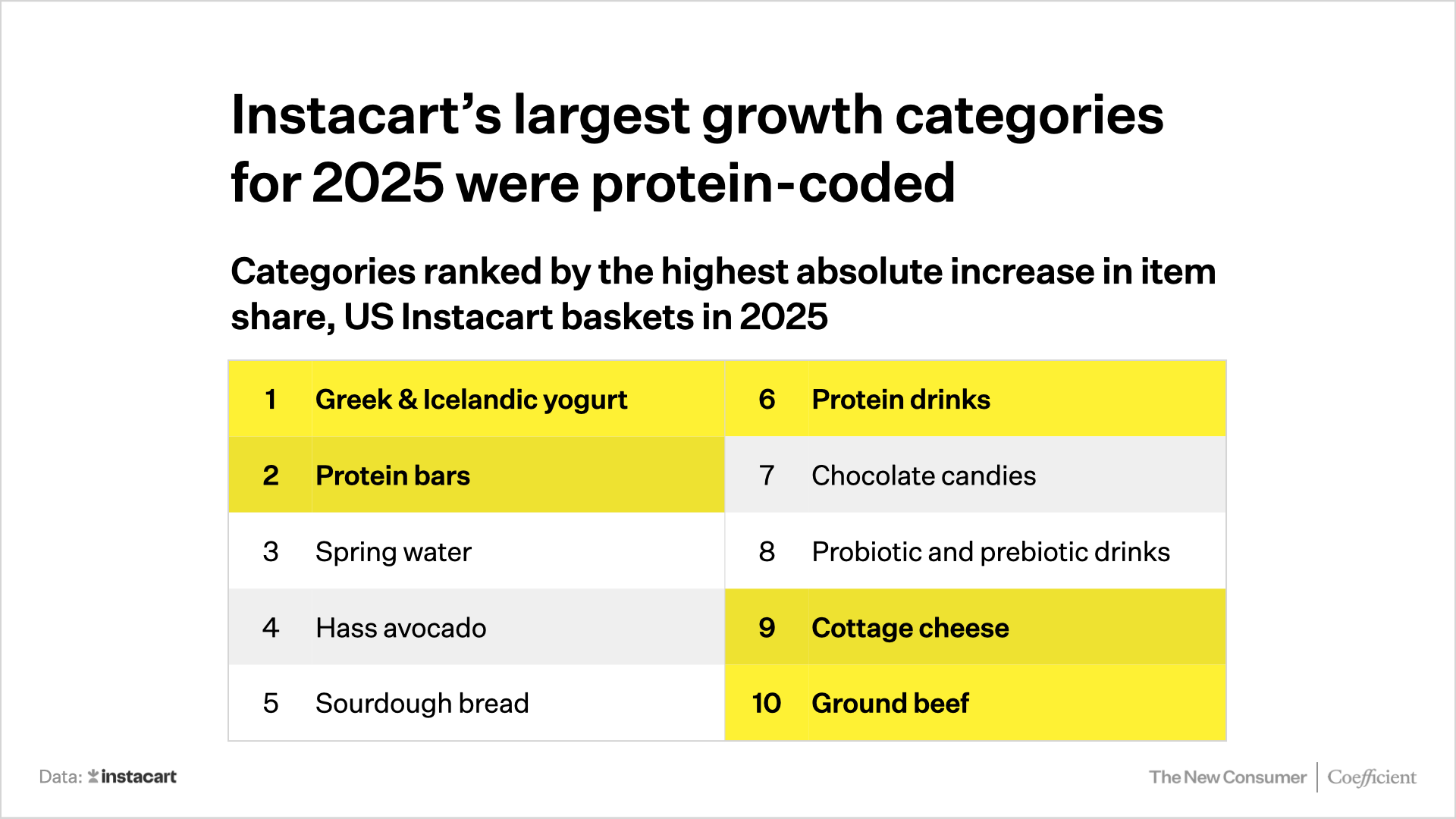
That’s translating to sales: Five of the 10 top-growing categories on Instacart last year were protein-coded, including Greek and Icelandic yogurt, protein bars, and protein drinks, according to exclusive data the grocery delivery giant contributed to our new Consumer Trends Food & Beverage special report, my latest collaboration with Coefficient Capital.
But where does protein actually belong?
We just asked those 3,000 US consumers to rate 18 food and beverage items — from snack bars and popcorn to coffee and beer — on two dimensions: How much does adding protein to each product feel like a natural or unnatural fit? And how interested would they be in trying a high-protein version?
The results are organized neatly. We’re calling it the Protein Feelings Matrix.
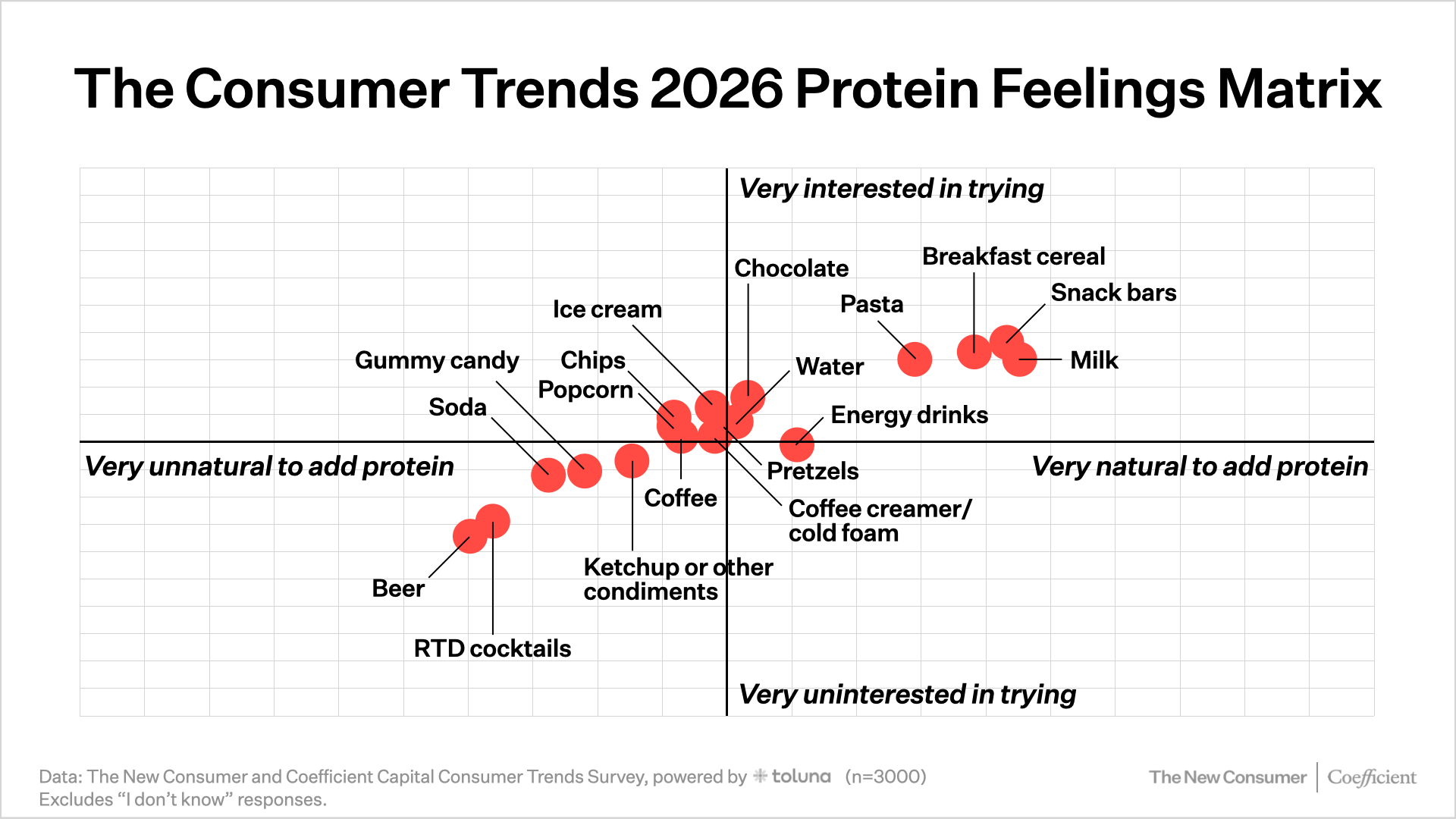
The obvious winners are obvious: There are some products — pasta, cereal, snack bars, and milk — where people, on average, think adding protein makes a lot of sense and are interested in trying high-protein versions. Many of these are established, mature categories for high-protein offerings, and should continue to be successful.
The clearest gimmicks are clear, too. Beer and ready-to-drink cocktails were the two items in our set where people, on average, think adding protein seems especially unnatural, and they’re not interested in trying high-protein versions. These won’t take over the world.
And among our items, there’s nothing really in the “weird but tempting” or “natural but gross” quadrants.
But then there’s a bunch in the middle: Chocolate, ice cream, chips, popcorn, water, coffee. Consumers, in aggregate, rate them near the neutral baseline on both dimensions.
One important distinction: Most of those middle products genuinely land in lukewarm territory, with many people selecting neutral responses for things like protein pretzels and popcorn. But protein water and coffee are more polarizing: They average near zero because people disagree — a near-equal force of very positive and very negative ratings — not because they’re indifferent.
This is where it will be up to food and beverage brands to create their own success: They’ll have to innovate to make high-protein products that actually taste good and are enjoyable to eat or drink. And they’ll have to figure out how to communicate to consumers that these products are worth whatever added cost, textural weirdness, or friction they add for the extra protein. Otherwise, they’ll never make a dent.
The good news, when you slice the data by different consumer groups, is that there are key demographics that are more interested than others in these products.
Younger consumers, for example — Gen. Z and Millennials, ages 15–45 in our survey — think it’s more natural to add protein to more products, and are more interested in trying those products.
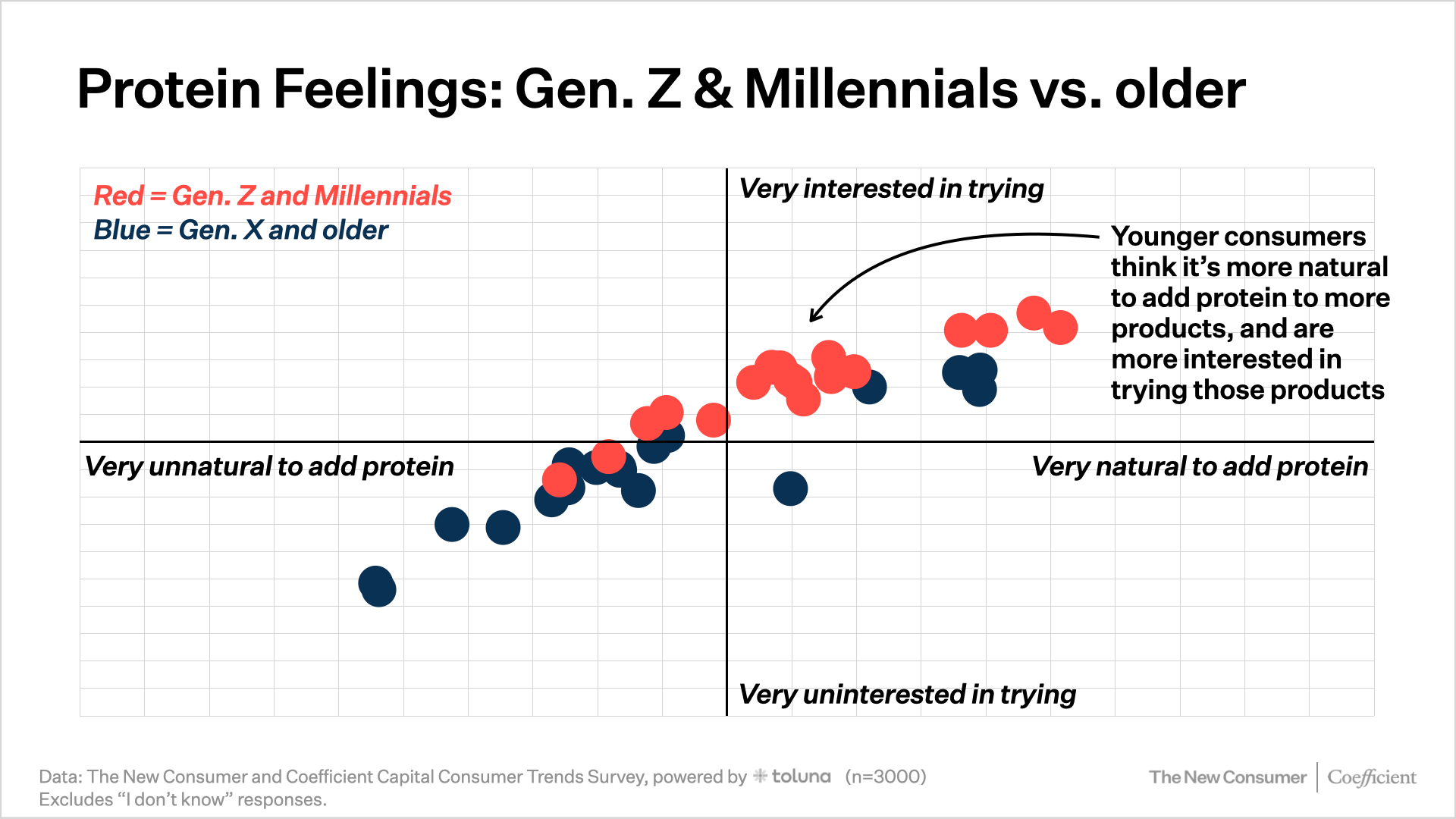
Specifically, protein chips, chocolate, water, and coffee all appeal to younger consumers significantly more than they do to older generations.
