

Early AI shopping data shows a shorter funnel with higher conversion
Great news for brands today. But new economics are coming.

Hello hello! It’s Dan Frommer, back with The New Consumer, en route to New York, where I’ll be speaking next Monday afternoon, June 29, at the Summer Fancy Food Show — come to my presentation!
Merci beaucoup to the Five Seasons Ventures team for letting me borrow a desk this week in their blissfully air conditioned office. Paris in 100+ degree heat, sans AC, is a problem that needs serious rethinking. I also spent 24 hours in Cannes, just enough time for precisely one (1) beach-adjacent rager with Casey Lewis and Day One Agency and a few coffee meetings. It was great to see a bunch of you there!
Today’s newsletter is free — thanks to Whatnot for sponsoring The New Consumer.
Presented by Whatnot
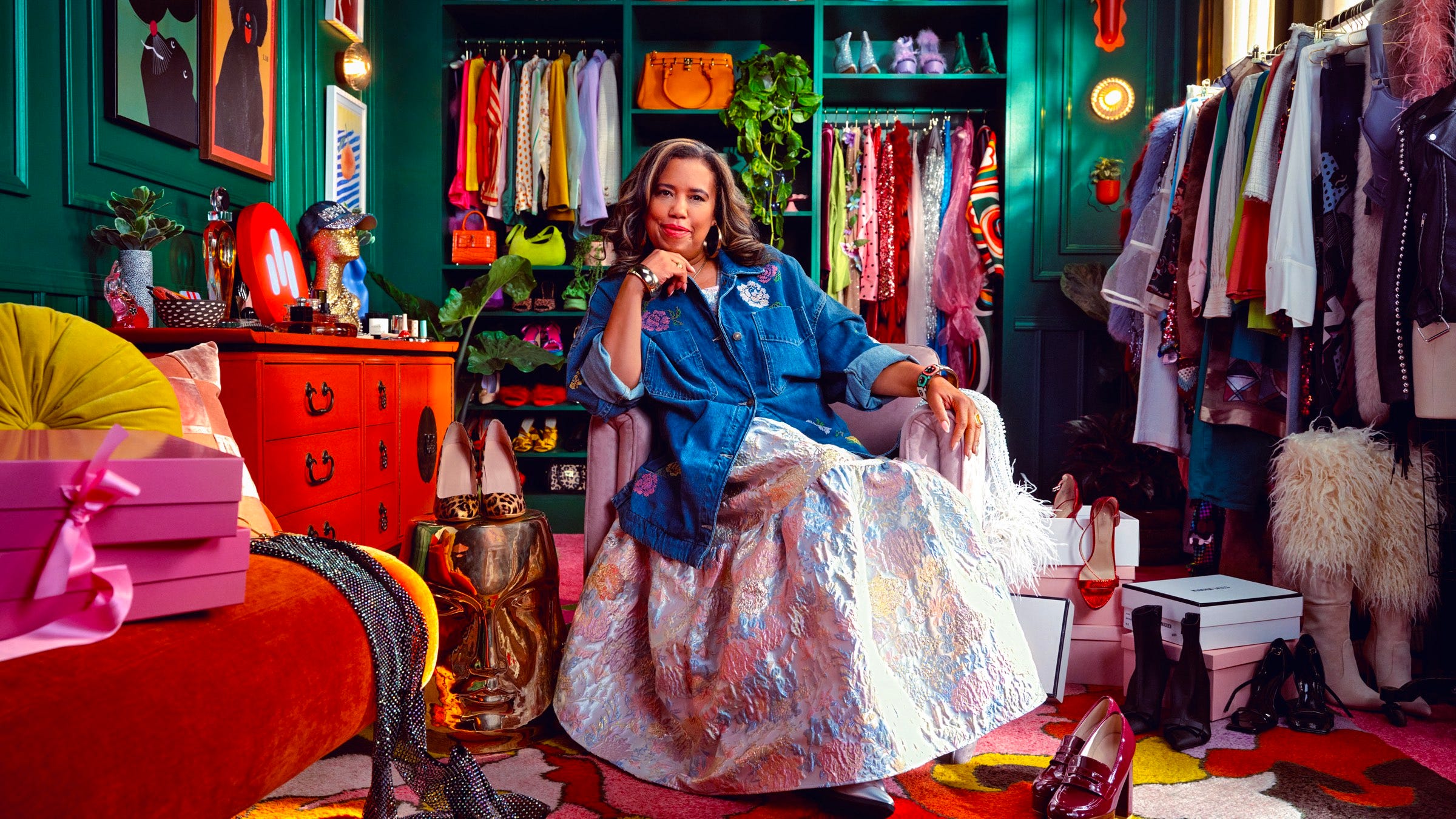
The Live Shopping Update — Fashion is now the biggest vertical on Whatnot by order volume. The category’s growth reflects a broader shift in how consumers want to shop online: not through static product pages, but through interactive experiences that combine discovery, expertise, and community.
For many shoppers, Whatnot functions like having a personal shopper on demand. Through live shows, buyers can ask questions in real time, request specific styles or colors, and get close-up looks at stitching, materials, craftsmanship, and condition before making a purchase. Sellers often develop relationships with repeat customers over time, learning their preferences and even sourcing items based on requests from previous shows.
The platform is especially resonating in luxury and resale fashion, where buyers value expertise and confidence as much as the product itself. Rather than shopping alone, buyers can enjoy the best parts of the in-person boutique experience online by interacting directly with knowledgeable sellers and fellow shoppers, celebrating great finds, comparing notes, and sharing the excitement.
The opportunity is translating into real business growth, and fashion sellers are building thriving businesses on the platform. For example, luxury handbag seller FashioNica has sold more than 10,000 luxury bags on Whatnot over the past two years.
Live shopping is creating new pathways for entrepreneurs while giving shoppers a more engaging way to discover and purchase their favorite products. Download Whatnot to learn more.
One of the bigger questions for the next decade of The New Consumer is how profoundly AI will reshape e-commerce, shopping more broadly, and — while we’re at it — the entire human-digital consumer experience.
As people increasingly route more of their queries and needs through AI assistants and apps, these tools will obviously have some role in helping decide what people buy, where they buy it, and how it’s purchased.
And as we’ll reveal in next week’s Consumer Trends report with Coefficient Capital, AI chat is already driving purchases, especially among younger users, according to our latest survey of more than 3,000 US consumers. Among Gen. Z and Millennials who say they’re weekly active users of ChatGPT, Claude, or Gemini, about two-thirds say they’ve purchased at least one product they learned about in a chat with an AI tool. Almost half of those purchasers said ‘many products.’
For brands, merchants, and marketing, this has implications that are either huge or not — and it’s still too early to know what’s really going to happen.
But here’s what we’re seeing now.
AI is driving more traffic and sales to retail and commerce sites, but it’s still a very small percentage.
Shopify, the e-commerce platform, said in May that AI-driven store traffic on its network grew 8x year over year in the first quarter of 2026, and orders from AI-powered searches grew almost 13x.
That’s showing faster growth than mobile and social — the last two major technological shifts — did at similar points in their maturity, Vanessa Lee, Shopify’s VP of Product, told me last week. “AI-driven commerce,” Lee said, citing industry data, is “growing nine times faster than social and three times faster than mobile did at this slightly-before-the-inflection-point stage.”
Shopify won’t share exactly how much traffic and sales that AI is currently driving across its network — my guess is that it’s a low-single-digit percentage. But it did provide a mini case study for one merchant: AI referral channels drove 3% of total revenue for Omnilux, which sells LED light masks, since mid-May. And in the brand’s customer surveys, ‘How did you first hear about us?’ grew to 10% attributed to AI channels, compared to 2% the same time last year.
Here’s another view: AI traffic to retail sites more than doubled year over year in May — up 138% — according to a new report from Adobe, which measures e-commerce traffic and sales. AI traffic to travel sites, specifically, nearly tripled in May, up 194%. Adobe also doesn’t disclose what these portions actually represent, but says they have grown 10-20x since the company started tracking AI traffic in late 2024.
(For what it’s worth, over the past 90 days, Google Analytics attributes about 1% of The New Consumer’s web sessions to ChatGPT, but about 4% of tracked new subscription revenue.)
AI traffic is converting better… or worse… for bigger orders.
AI-referred sessions on the Shopify network convert at 49% higher rates than organic search, the company disclosed in May. This is nearly universal across categories — AI conversion beat organic in 23 of 25 categories, an average of 56% higher. And those AI-referred customers place orders that are, on average, 14% larger than those from organic search.
In Adobe’s network of retail sites, AI traffic converted 54% better than non-AI sources, “a sharp reversal from a year ago when conversion rates were nearly half as high.” And it said that AI visits are now worth 53% more. But in the travel category specifically, it said AI-driven traffic converted 28% less than from non-AI sources.
The AI shopper shows up later in the funnel.
Why does traffic from AI chatbots convert better? Part of it is that shoppers are arriving on merchants’ sites later in the sales process, or funnel, when they’re more primed to purchase.
More than half — 55% — of AI-referred sessions in the Shopify network start on a specific product page, compared to 20% that come from organic search. This suggests that the AI tool is taking care of a lot more of the initial filtering process than a web search does — which makes total sense. Or as Lee puts it, “By the time they reach your webpage, they might have already talked to ChatGPT several turns about your product.”
But first, the AI needs to know what you’re selling.
One basic hurdle: Even on top-performing sites, Adobe estimates that 30%–40% of high-value page content still can’t be read by AI.
To make this work better, Shopify has launched what it’s calling the Shopify Catalog, a structured data feed of every product for sale on Shopify’s network, with detailed information, that partners and agents can use to improve their recommendations.
And this is already helping, too: “Catalog-powered AI searches, when we know that they’re using our catalog to help power those searches, they actually convert about two times better than just ChatGPT searching the web,” Lee says.
For brands and merchants, there are obvious tradeoffs here.
It’s great to land a customer who’s already most of the way to purchasing something, especially without having to share a cut with an ad network like Google or Meta, or a third-party retailer.
But it also means you’re less in control of the marketing and product conversation with the customer in the first place. And because ChatGPT and other AI chatbots don’t share any details about the conversation or customer, you don’t have any additional context for their visit.
This matters because if chatbots become consumers’ preferred tools for finding products, they’ll have tremendous power as intermediaries. At the very least, they could start auctioning that click to the highest bidder — which could be you, a marketplace that stocks your stuff, or your competitors. (ChatGPT is moving full-force ahead with its advertising product.)
The big AI chatbot companies — or vertical specialists in travel, clothing, food, etc. — could also decide to try owning more of the checkout and purchase flow, treating brands and merchants more as fulfillment endpoints and retail-media ad buyers.
But this is trickier than it seems. ChatGPT, for one, has already pulled back some of its integrated checkout ambitions, and Claude seems more focused on coding and utility than shopping. Google has been trying to turn its search portal into more of a shopping property for decades, and I’d expect the same within Gemini. (Though advertising remains the bigger, higher-margin opportunity.)
One piece of good news for brands…
At least today, AI chatbots tend to be sending traffic to brands’ own websites, as opposed to marketplaces, according to research by MoffettNathanson analyst Michael Morton.
“In traditional Google Search,” Morton explained to Stratechery’s Ben Thompson, a brand’s website — which he calls brand.com, “would outpace Amazon, Wayfair, Chewy, eBay, Etsy — the marketplaces — sometimes by about 2x, depending on the time of year.”
But “When we aggregate the traffic coming from AI platforms … to the different marketplaces and brand.com, brand.com is outpacing what I’ll call the legacy marketplaces 4-8x.”
So brands are getting customers later in the funnel, and the traffic is more concentrated to their direct-to-consumer channel than to marketplaces and aggregators. That’s about as good as it gets.
But it’s still early. Things haven’t changed much yet. And they probably will.
“If you think about … how much social and mobile have changed how people shop,” Shopify’s Lee told me, “we can only make sure that we are prepared, and that our merchants are prepared for the eventuality that that’s also going to happen with AI.”
For now, brands are getting a boost. But there’s still a lot of game left — and new economics are coming.
Also on my radar:
Starbucks employees will be able to earn an ad rev-share for posting on TikTok. It’s the first brand to pilot a new TikTok feature called “custom Creator Networks,” which the companies announced this week at Cannes.
I love this: Here, Starbucks is supporting employee creativity, getting more free/cheap promotional content onto TikTok that makes the brand seem appealing to younger consumers. And it’s giving baristas a new potential income stream that isn’t just a tip jar.
One of the most important parts to Starbucks’ turnaround under CEO Brian Niccol is attracting and retaining the best store staffing possible. Niccol has smartly been talking about making Starbucks the “best job in retail” since taking over in 2024, and this feels like a cool perk.
“Roughly half” of the beverages served at Blue Bottle cafes globally are iced, CEO Karl Strovink posted. So it’s launching a new, cold-process, “Kyoto-Style” espresso. Curious to try. (Will also be interesting to see how much more Blue Bottle leans on Japan soft power under its new Chinese PE ownership.)