

The 25 brands consumers most identify with — and the 25 they aspire to
Nike is who they are. Gucci is who they want to be.

Hello hello! It’s Dan Frommer, back with The New Consumer, and back in sunny Los Angeles for the next month — let me know if you’re around. I knew I was back in the US when I walked into Sprouts and immediately saw PROTEIN HYDRATION and a MICRO PLASTICS DETOX kit. (Might I suggest a bundle?)
Presented by Shopify
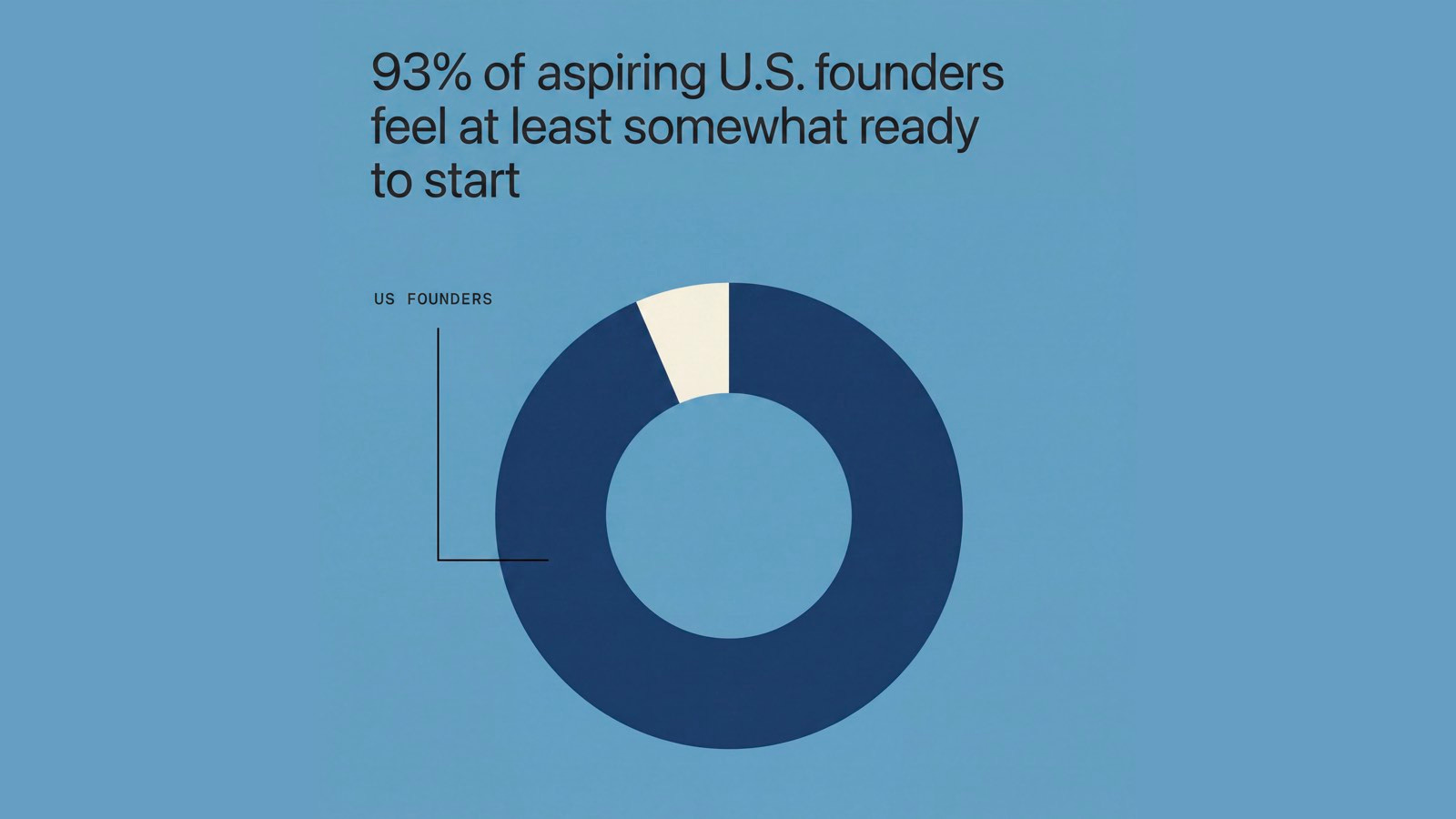
93% of aspiring US founders say they feel ready to start a business — The advice sounds reasonable: wait until you’re ready. New research from Shopify and The Harris Poll suggests that’s exactly what keeps people from starting.
In a survey of business owners and aspiring entrepreneurs across five markets, 93% of aspiring US founders said they feel at least somewhat ready to start a business, and more than half said they could start today. Yet most haven’t. It’s the preparedness paradox: the readiness people wait for tends to arrive only after they begin.
The founders who already gave the same reasons once — they just started anyway. In four of five markets, roughly 7 in 10 worked through their earliest challenges by trial and error, learning as they went. And among those who waited before launching, up to 57% say they wish they’d started sooner.
They didn’t start with nothing. Up to 8 in 10 say technology and AI have made it easier to start with limited resources or expertise, helping them find customers and get set up to sell. Money is still the barrier most name (38-46% across markets), so most founders began small, within their means.
The readiness you’re waiting for? You probably won’t feel it until after you begin. Read the research.
If brands are a key part of the modern consumer identity, which brands do today’s consumers identify most with?
Last month, we asked more than 3,500 US consumers to write in — not choose from a list — the name of one brand that “feels like it was made for someone like you.” We then asked them to write in “a brand you wish you could buy more of, but feels like it’s meant for someone with more money.” This research was part of my latest Consumer Trends Survey, in partnership with Coefficient Capital; Toluna fielded the survey in June.
Chart of the Day
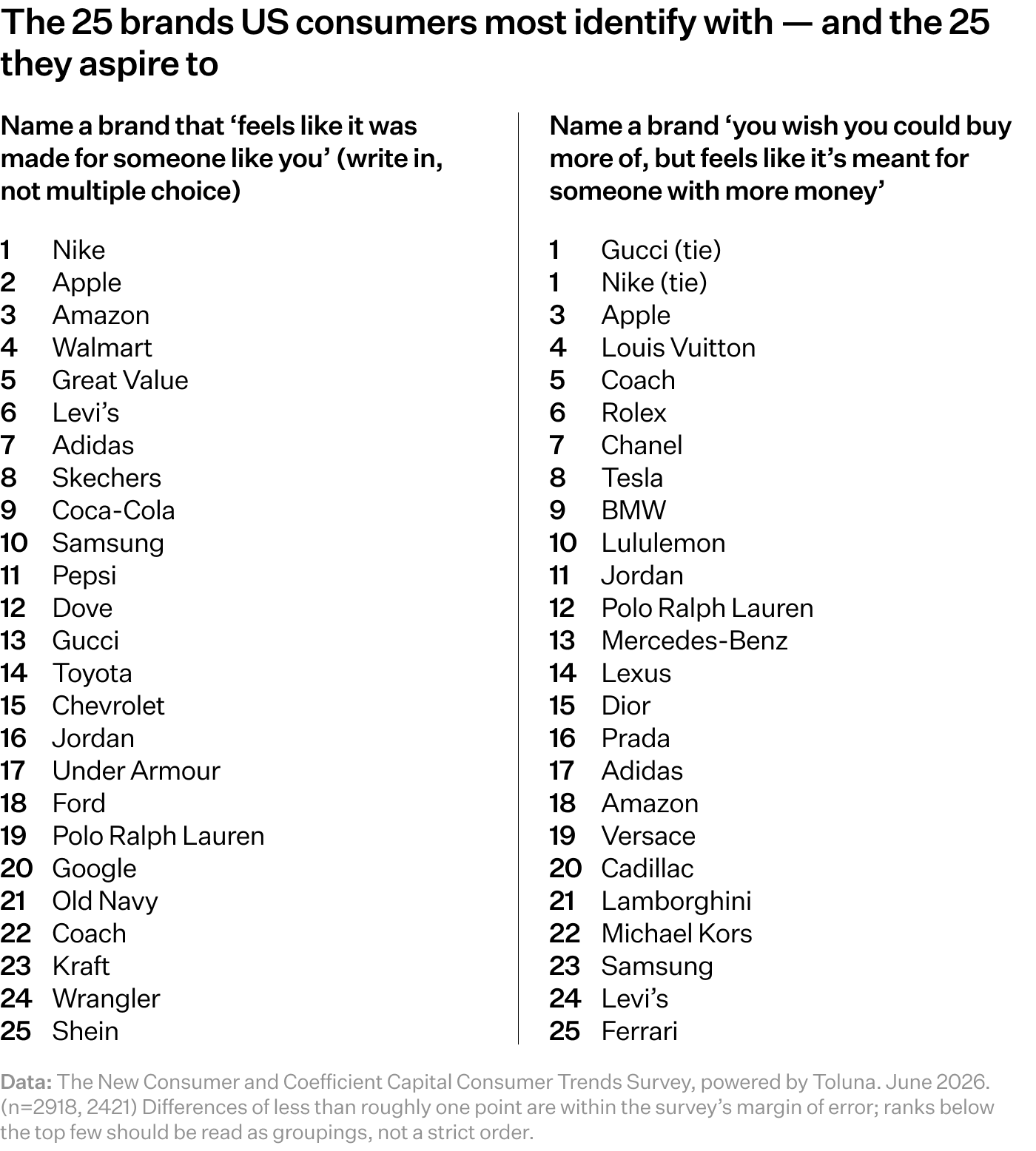
A brand “made for someone like you”: Nike was the top submission, by far, among our overall survey panel — nearly 17% of those who submitted a legible brand name wrote in the world’s top athletic shoe brand. Apple came in second place with around 4% of submissions. Then Amazon, Walmart, and Great Value, the Walmart private-label store brand. No other submission got more than 2% of write-ins.
A brand “you wish you could buy more of, but feels like it’s meant for someone with more money”: Gucci (the Italian luxury and fashion house) and Nike tied for the top brand here; more than 8% of respondents wrote in each of those brands. Apple came in third place with around 4% of submissions, followed by Louis Vuitton, the French luxury brand; Coach, the US handbag and leather goods brand; Rolex, the Swiss watch brand; and Chanel, another French luxury house.
The two lists do overlap. Of the top 25 “for me” brands, 10 also made the list of more aspirational brands — though only a few, led by Nike, Apple, and Gucci, rank highly on both. “For me” brands tend to concentrate in everyday apparel, groceries, and mass retail, while the aspirational brands are dominated by luxury houses and premium cars.
And people wrote in a lot of different brands — we tallied more than 900 that were legible and distinct. (People also spelled Louis Vuitton 24 different ways; 51 of 78 mentions got it right.)
On the “for me” list, the top 25 brands represented 55% of submissions (among those who wrote in a legible brand), and on the aspirational list, the top 25 brands represented 61%. Even still, 17% declined to name a “for me” brand, and 31% declined to name an aspirational brand. (We also purposely didn’t ask for a specific type of brand or vertical, which likely contributed to the diversity, and also confused some respondents — fair enough.)
Of course, different groups of people gravitate toward different brands. And it’s worth noting that this was not designed to be a nationally representative survey. While we’ve controlled and weighted for age and gender, our overall panel was lower-income, on average, than the overall US population, and had different racial concentrations — both of which affect brand preferences to some degree.
Among men and women, on the “for me” list, Nike ranked no. 1 among both, but men wrote it in at twice the rate, on average; women overindexed writing in Walmart, Great Value, Dove, and Coach.
