

The next 40 million GLP-1 users
How they’re different and what it means for food businesses. Also: Why Grüns won.

Hello hello! It’s Dan Frommer, back with The New Consumer.
What’s on your mind? I’m collecting questions now for a special mailbag issue of The New Consumer. There’s no question too mass or too niche — just shoot me an email at dan@newconsumer.com or add to the comments. Send yours in and I’ll answer the best ones in a future newsletter. Thanks in advance!
Let’s do some spring members Office Hours! I’ve just added some slots to the calendar for next Wednesday, Apr. 22. As always, these 20-minute Zoom sessions are off-the-record by default, and the time is yours — I’m here for advice, ideas, feedback, a quick pitch, whatever is most useful. Become a member or log in here for the link. I look forward to speaking!
Presented by Whatnot
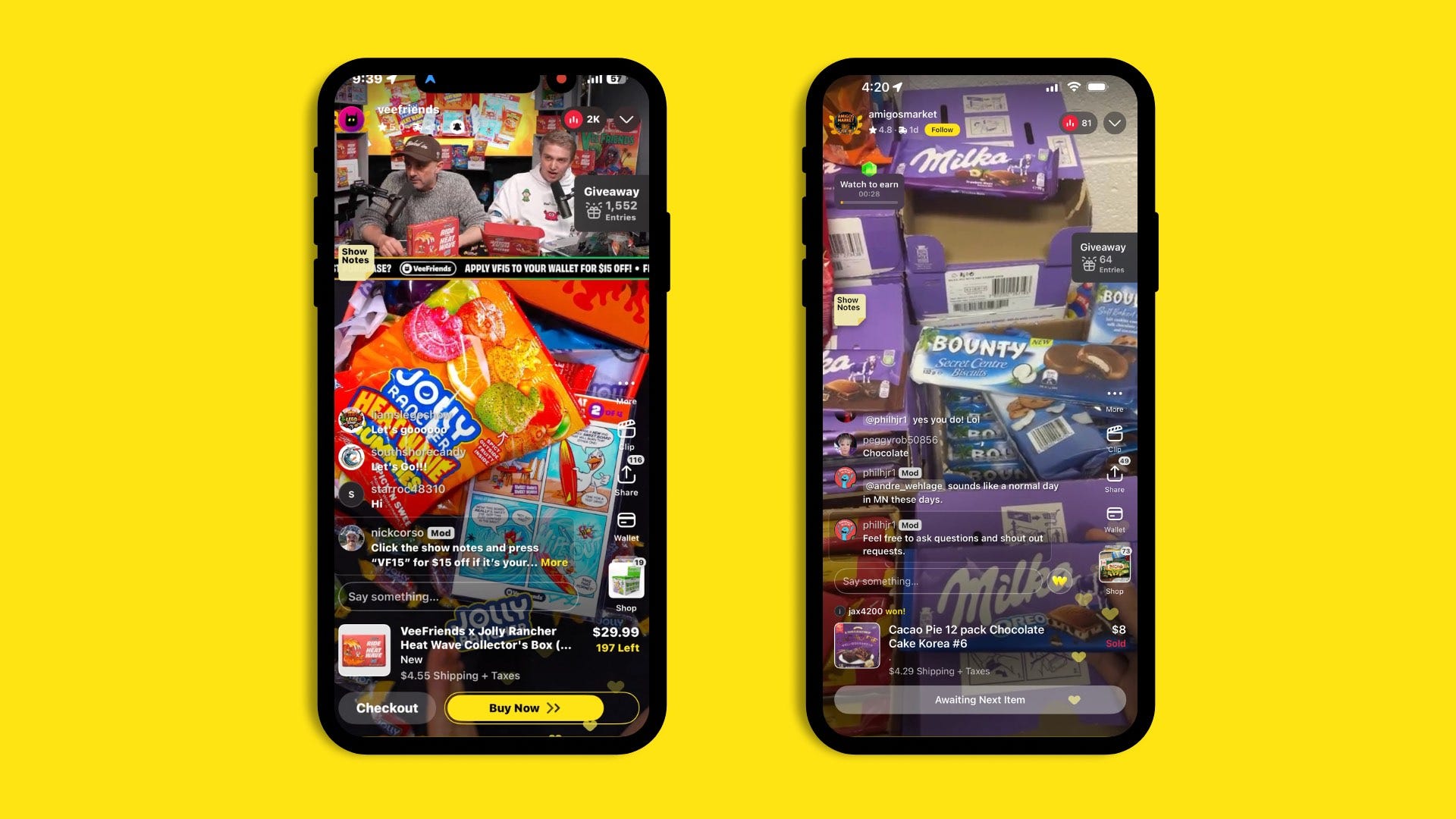
The Live Shopping Update — Snacks are quickly becoming one of live shopping’s most engaging categories. On Whatnot, sellers are turning everything from international snacks to candy into interactive shopping experiences that feel more like visiting a grocery store or specialty shop than browsing online. Buyers can watch tastings, ask questions in real time, and discover new products, just as they would when talking to a shop owner or sampling products in store.
This format is resonating with consumers. Snacks and candy sales on Whatnot have grown roughly 30% month-over-month since July 2025, while transactions have increased 2.5x, signaling strong demand for live shopping in everyday product categories. International snacks have become a particularly strong segment — sales are up 388% since last July — as sellers source hard-to-find products from around the world and introduce them to buyers in real time.
Some of the biggest moments in the category come from limited-edition snack drops and releases, where hundreds of items can sell out in seconds while thousands of viewers watch live. For example, Gary Vaynerchuk, CEO of VaynerMedia and Whatnot seller (@veefriends), took to Whatnot to sell his special collector’s box of Jolly Rancher’s new “Heat Wave” gummies — all 1,055 units sold out in minutes.
The rising popularity of snacks on live shopping platforms points to a broader shift in retail: Live commerce is taking everyday purchases from simple transactions to interactive, community-driven experiences. Download Whatnot to learn more.
Ozempic and other GLP-1 medications — highly effective, life-changing weight-loss drugs — are among the most important forces shaping consumption today and in the future. Now they’re about to go mass.
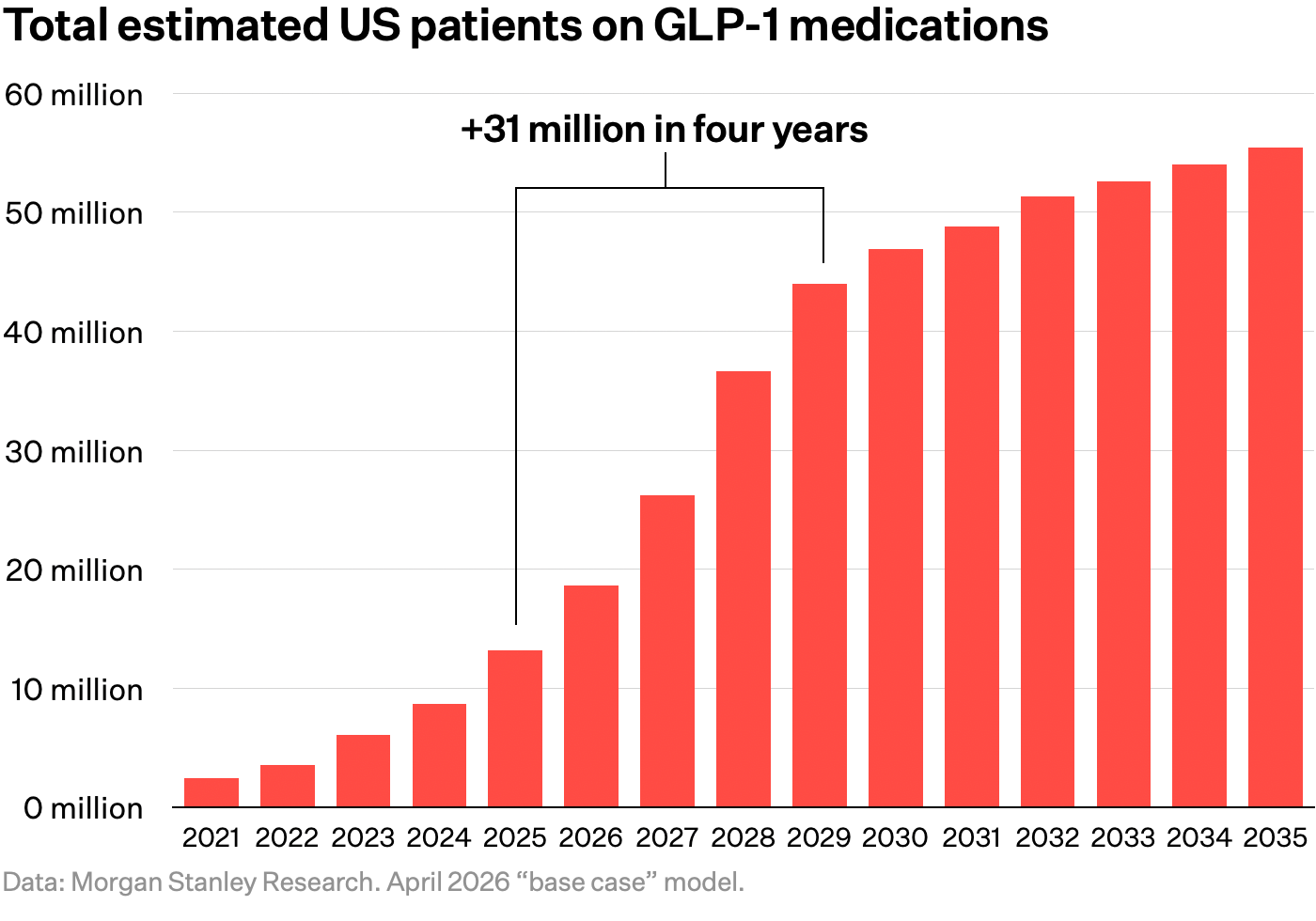
In a new research report published last week, Morgan Stanley projected that the number of Americans on GLP-1s will quadruple over the next decade. Specifically, it estimates that 55 million Americans — around 15% of the US population — will be on a GLP-1 medication by 2035, up from around 13 million at the end of 2025.
(One quick note: These numbers are actually much lower than other estimates I’ve seen. For instance, a KFF poll from last November found that 12% of US adults said they were currently taking a GLP-1 drug, implying around 30 million active users — roughly double Morgan Stanley’s estimate. Why the gap? One thought is that Morgan Stanley is undercounting the booming compounded market — people getting GLP-1s through Hims and less reputable online pharmacies. There’s also a lot of churn of people going on and off GLP-1s, and probably some noise in self-reported survey data. So it’s actually somewhat tricky to model an active-user count. And different models are based on different assumptions, making them tough to compare apples-to-apples. My guess is that the real number is somewhere in the middle.)
Either way, most of that growth is forecast to happen in the next few years, driven by lower prices, new pill-based options that are far less invasive than today’s injectables, and expanded Medicare coverage.
CHART OF THE DAY
The key question for The New Consumer has always been how GLP-1s — which cause users to consume fewer calories, and eat and drink differently — will affect consumption and spending. Especially once tens of millions of people are on them.
What’s happening now?
For a while, there were concerns that the food industry could get hit hard if people just stop buying certain products. So far, that hasn’t happened: Hershey’s is still growing, the J.M. Smucker Company is still growing, etc. Part of that is diversification, part is that the GLP-1 population is still relatively small, and part is that people tend to go back to some previous habits when they stop taking GLP-1s.
But people who are on GLP-1s do eat less — that’s the whole point.
