

Why protein coffee and ice cream might actually work
Two new launches by Oats Overnight and David Protein enter two polarizing categories — but where the interest skews young.

Hello hello! It’s Dan Frommer, back with The New Consumer. And back in Paris after a very quick trip last week to New York, where I presented about Gen. Z beverage trends at Oatly’s Aftertaste event in the Flatiron.
(Btw: I’ll be in Copenhagen this week for 3daysofdesign. Let me know if you’ll be around!)
I’ll share more from the event and my talk soon, but here’s one of my favorite slides: Matcha continues its incredible growth story, as seen here in new point-of-sale data that Square pulled for me. Matcha passed chai a couple of years ago and continues to grow.
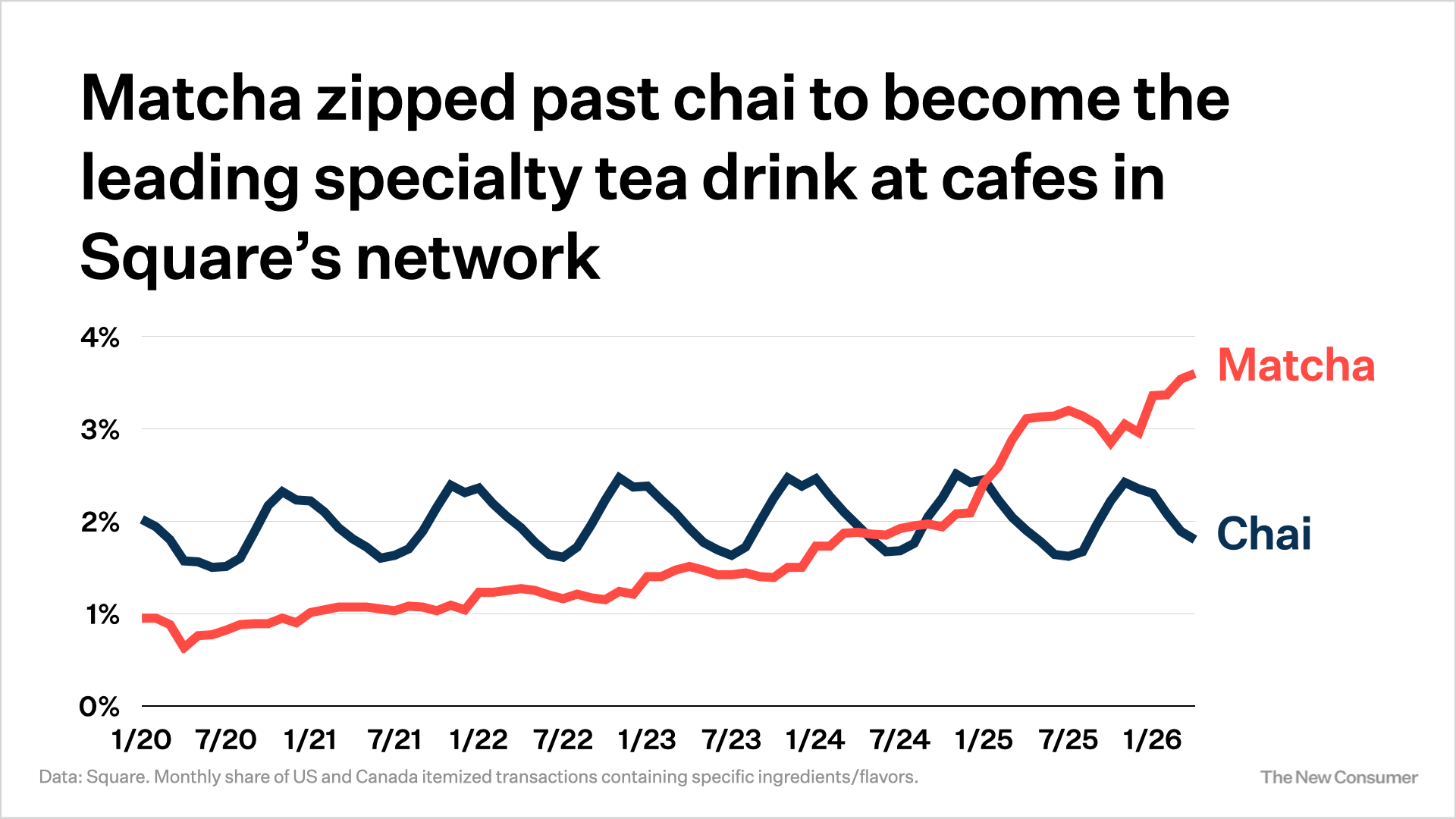
One interesting difference between matcha and chai is an emerging reverse seasonality. Chai sales peak in cold-weather months, while matcha increasingly peaks during the summer. This tracks: Chai’s warming spices make the most sense when served hot, while matcha has become a more iced-dessert-like beverage platform.
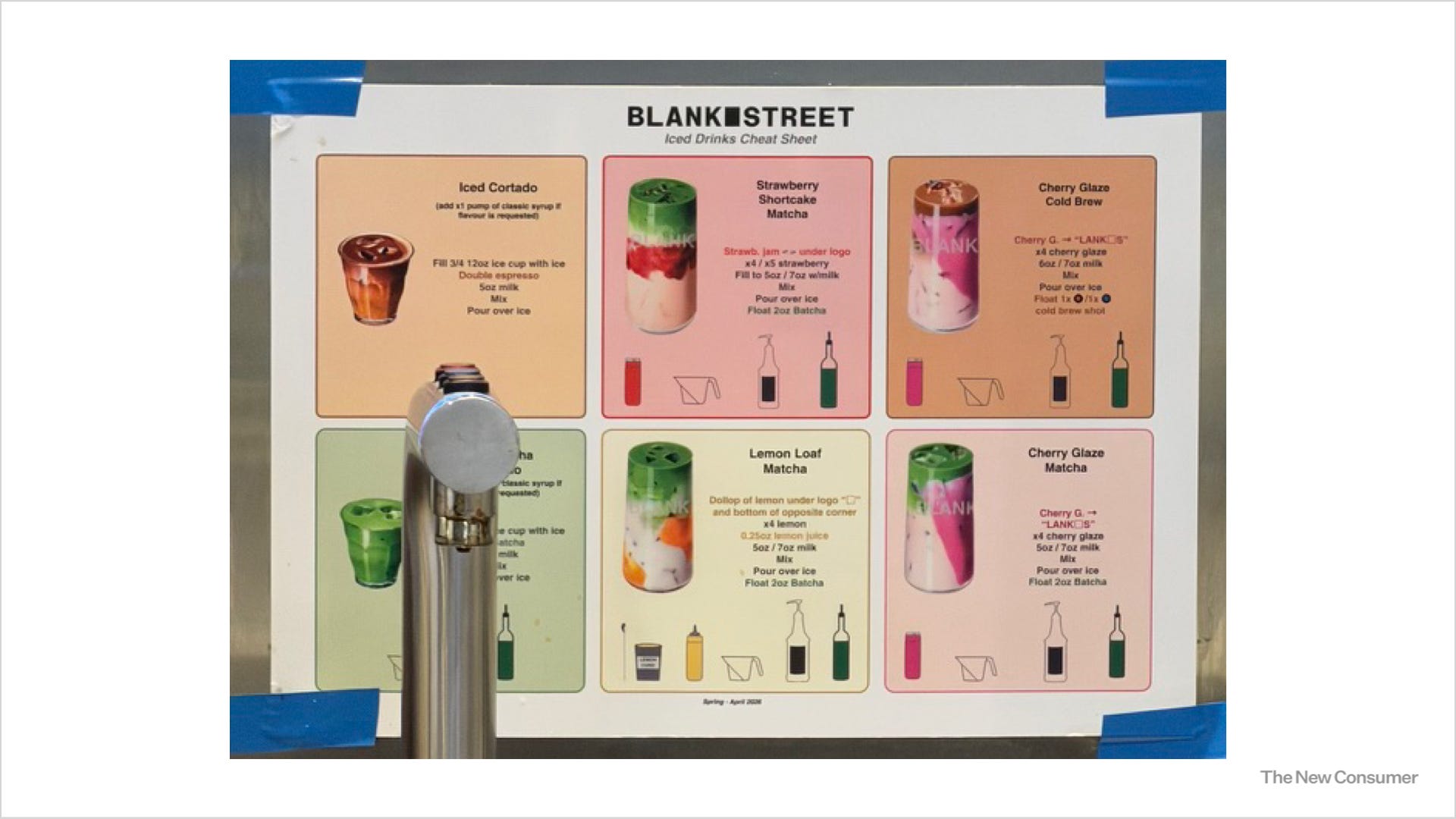
Case in point: Here’s a blurry creepshot I took in London a couple of weeks ago of the Blank Street employee cheat sheet, taped up on the wall, for assembling its current seasonal iced drinks. These include “Lemon Loaf Matcha” and “Cherry Glaze Matcha” — two beverages that I can say with confidence did not originate in Kyoto, but probably taste disturbingly great and look cool.
More soon! Thanks again to Oatly for inviting me as a partner. And kudos to the Care of Chan team on a smart and stylish event.
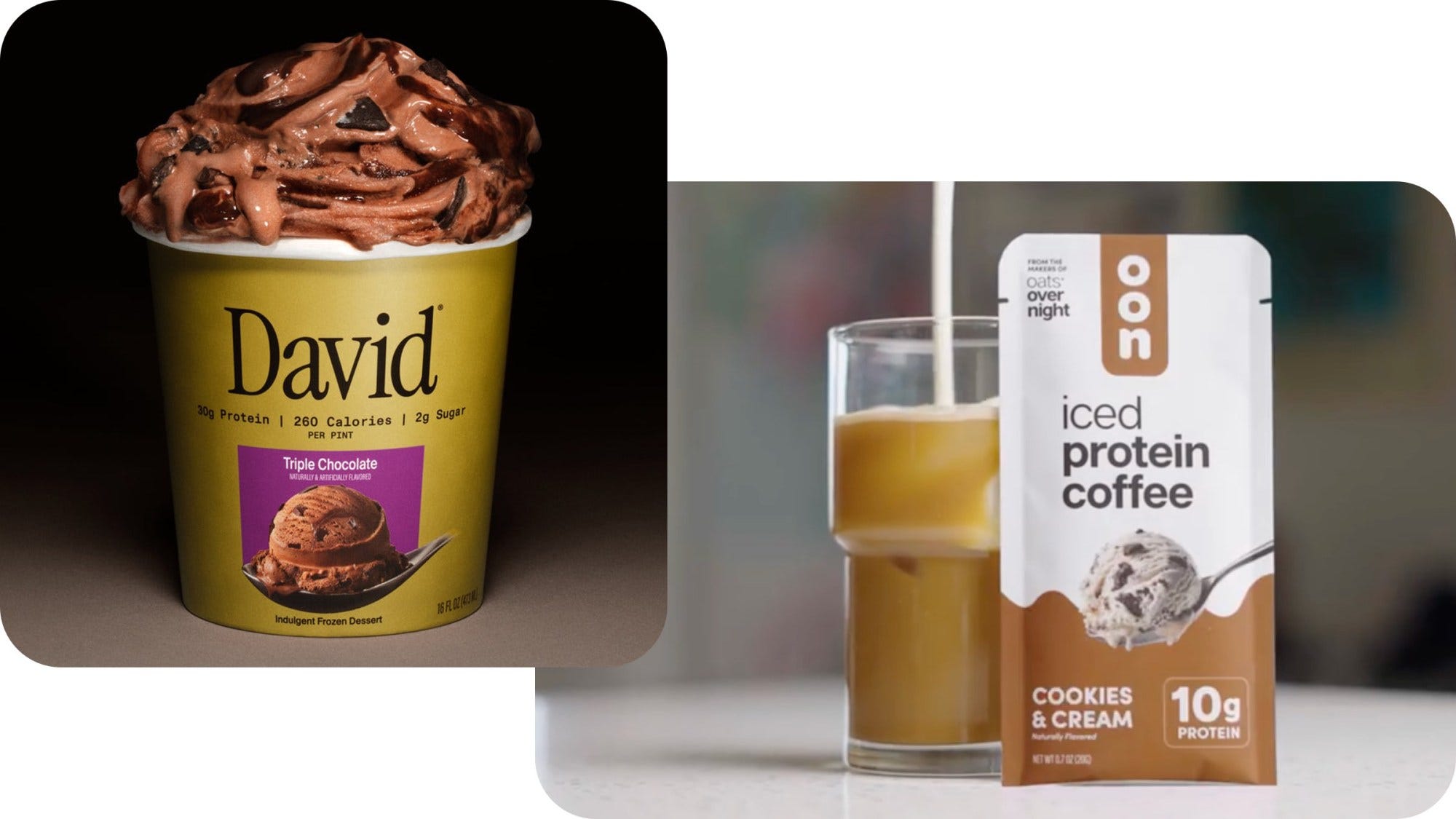
As protein continues to creep into more food and beverage products, two recent launches could prove interesting case studies in the making: Oon Iced Protein Coffee, a new sub-brand and product line from Oats Overnight, the company that’s built a successful subscription business around its protein-fortified overnight oats breakfast kits. And David Protein, the fast-growing and controversial protein brand, has just expanded into ice cream.
Unlike mature protein categories like snack bars and smoothies, it’s not clear that consumers want protein in their coffee or frozen dessert. But our Consumer Trends research suggests that younger consumers are more open to the idea.
Each pouch of Oon’s instant coffee includes 10g of protein (from whey) as well as about 100mg of caffeine — the equivalent of a normal cup of coffee — and a light sweetness with 4g of sugar. It’s a powder designed to be “spoon-stir soluble” for maximum convenience, founder and CEO Brian Tate tells me. “You just rip and pour” — no frother or shaker required.
Tate considers “extreme flavor variety” one of Oats Overnight’s core tenets: It has more than 60 flavors, and tests new ones continuously with its subscribers, which keeps them curious and engaged. (Oon itself was incubated among and refined by Oats Overnight subscribers for more than a year.)
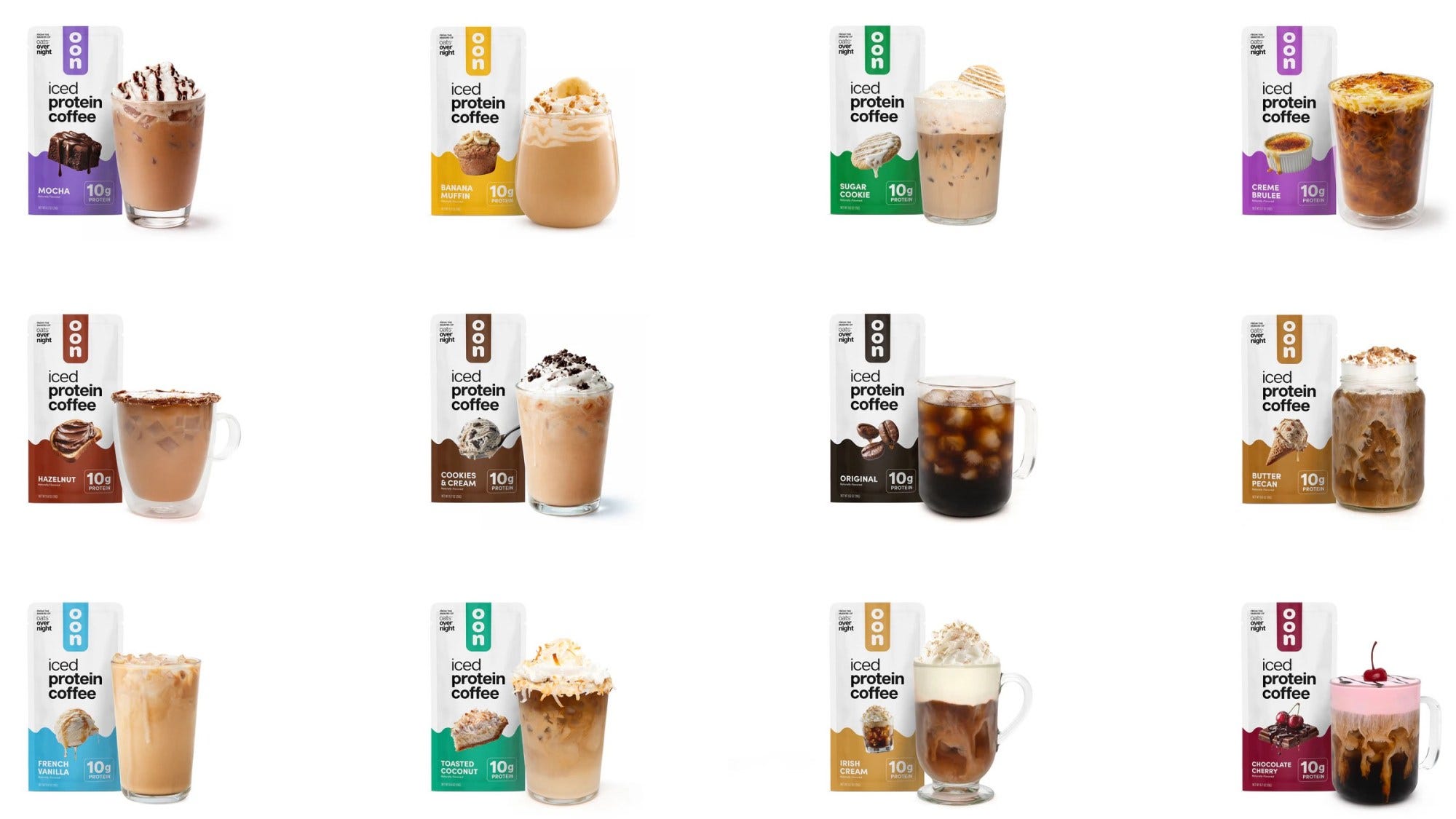
And that extreme flavor variety is a key part of the strategy for Oon, too: At launch, it’s available in 13 flavors, including traditional latté flavors like French vanilla and mocha, as well as more dessert-y options like toasted marshmallow, chocolate cherry, and creme brulée.
“We found with our data that customers really prefer to not have this flavor bomb, super-sweet thing,” Tate says. “Light sweet, light flavor is the way to go.”
Subscriber feedback also led the company to upgrade the coffee base to a more premium, Colombian medium-roast that costs around four times as much. “We learned that it’s very important towards overall taste. This final product is very good for coffee lovers.”
The plan is to launch a new flavor every month for a while, and subscribers will receive in-development packs to help test and refine.
Who’s this for?
My research partners at Coefficient Capital and I recently surveyed 3,000 US consumers about their protein goals for our Consumer Trends Food & Beverage report. We learned that a large number of consumers want more protein in their diets: 65% of Gen. Z and Millennials said they consider themselves someone who’s “actively trying to consume more protein.” (Thus all the new products coming to market.)
But where do they actually want to eat or drink it?
We asked our panel to rate 18 food and beverage items — from snack bars and popcorn to coffee and beer — on two dimensions: How much does adding protein to each product feel like a natural or unnatural fit? And how interested would they be in trying a high-protein version?
The obvious winners were obvious: Snack bars, milk, breakfast cereal, and pasta were the four products (among our 18) where people, on average, thought adding protein made a lot of sense and were interested in trying high-protein versions. The weird losers were also obvious: Beer, for example.
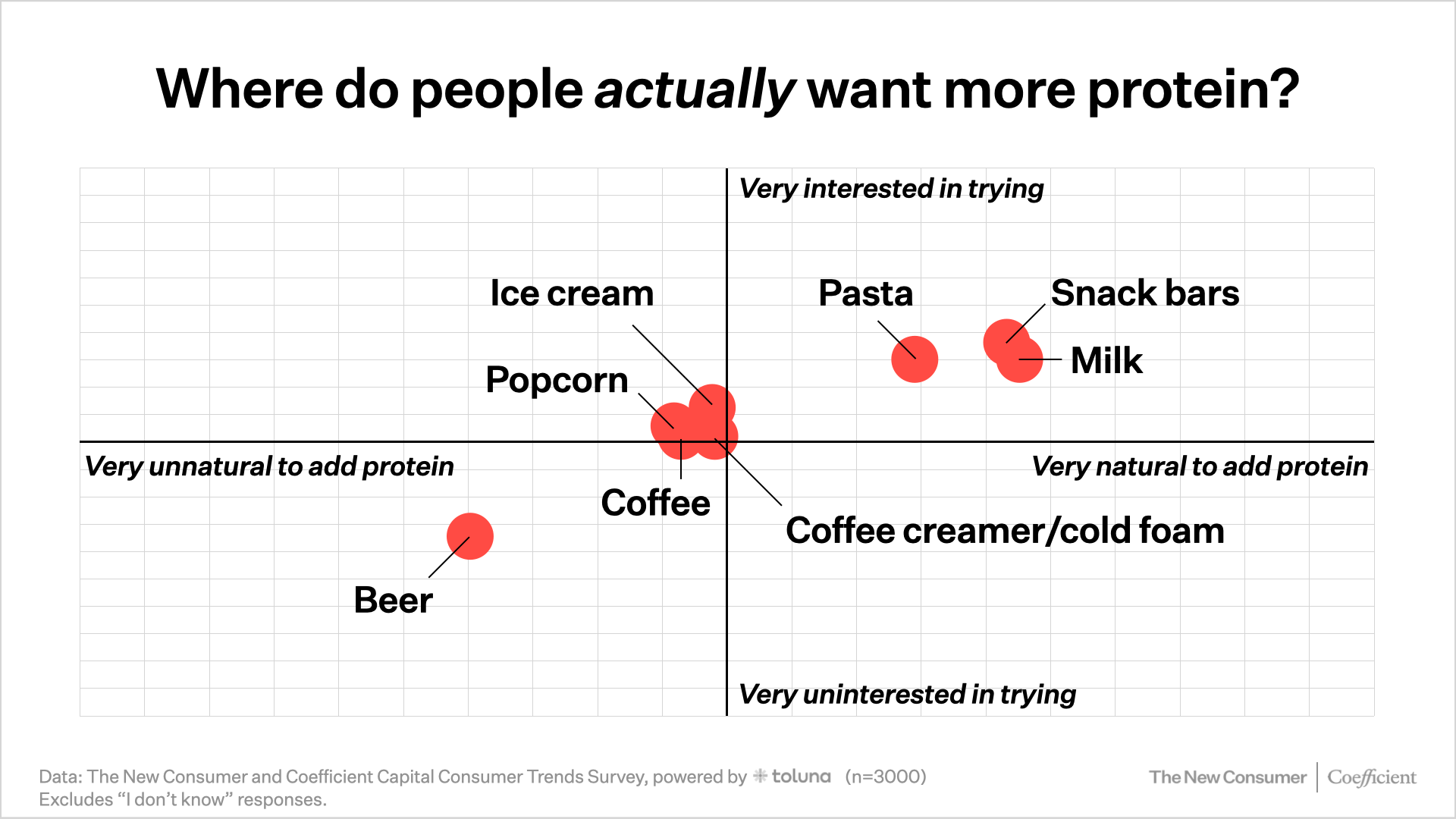
But then there were a bunch of products in the middle: Coffee, chocolate, ice cream, chips, popcorn, water. Consumers, in aggregate, rated them near the neutral baseline on both dimensions.
Protein coffee turned out to be one of the more polarizing items. It averaged near zero because people disagreed — there was a near-equal split of very positive and very negative ratings — not because they felt indifferent. Younger consumers, in particular — Gen. Z and Millennials — think of protein coffee as more natural than older consumers do, and are more interested in trying it.
